
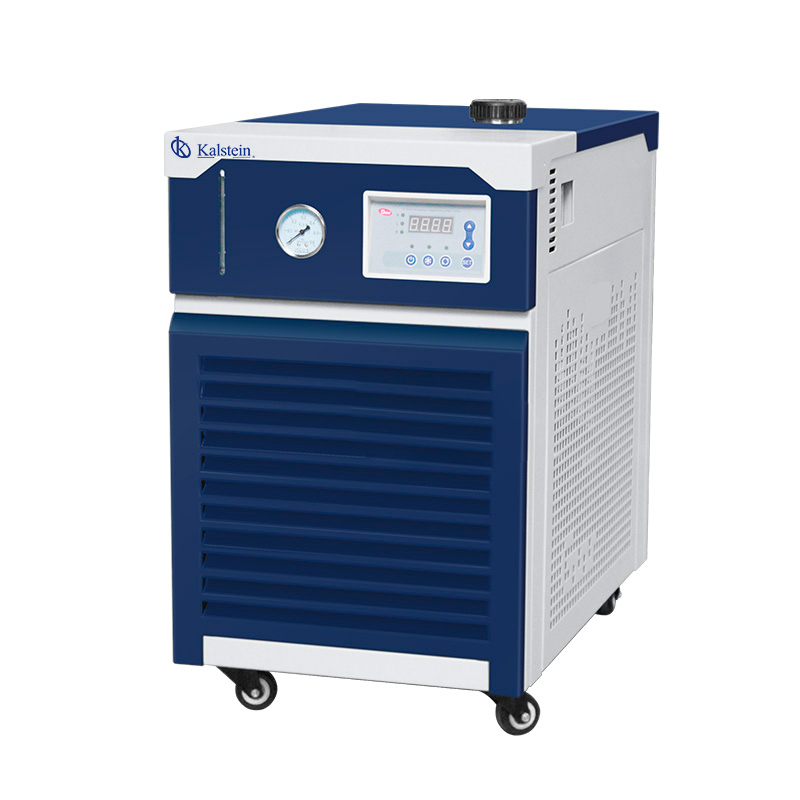
The world of scientific research and laboratory processes demands equipment that ensures precision, reliability, and efficiency. One such crucial piece of equipment is the recirculating chiller, a device primarily used to cool laboratory apparatus like rotary evaporators, analytical instruments, and reaction vessels. In this article, we will delve into a comprehensive comparison between two notable recirculating chillers: the Kalstein Recirculating Chiller YR02302 // YR02305 and the Polyscience Recirculating Chiller, examining their features, functionalities, and market positioning.
Kalstein’s Recirculating Chiller YR02302 // YR02305 boasts a robust design tailored for consistent performance. It offers an impressive cooling capacity and is engineered for user-friendliness and minimal maintenance. This model is particularly renowned for its silent operation and energy efficiency, making it a favorite in energy-conscious lab environments. On the other hand, the Polyscience Recirculating Chiller is a staple in many laboratories due to its dependability and cutting-edge technology. It is known for precise temperature control and a broad operating range, which makes it suitable for diverse applications.
| Feature | Kalstein Recirculating Chiller YR02302 // YR02305 | Polyscience Recirculating Chiller |
|---|---|---|
| Cooling Capacity | High | Moderate |
| Energy Efficiency | Excellent | Good |
| Noise Level | Low | Moderate |
| Usability | Very User-Friendly | User-Friendly |
| Maintenance | Low | Moderate |
How They Work
Both the Kalstein and Polyscience recirculating chillers operate on the principle of heat exchange. These devices circulate a fluid, usually a water or glycol solution, through a system that absorbs excess heat from equipment. This heat is then expelled through a refrigeration cycle involving compressors and condensers, allowing the chiller to maintain precise temperature control.
What They Are Used For
Recirculating chillers from both Kalstein and Polyscience are used for cooling various laboratory instruments and setups. These devices are essential in processes requiring strict temperature management like chromatography or spectroscopy. They are also used in research environments where consistent and reliable cooling is critical, ensuring experimental integrity and preventing equipment overheat.
Types
The market offers a diverse range of recirculating chillers to suit different needs. Some are built for high-capacity industrial use while others cater to smaller benchtop applications. Kalstein’s models often focus on energy efficiency and low noise levels, which are ideal for labs where these factors are crucial. Meanwhile, Polyscience provides versatile models known for their broad temperature range and precision.
Market Price
Pricing for recirculating chillers can vary significantly based on capacity, technology, and brand reputation. Typically, Kalstein’s recirculating chillers are competitively priced, offering excellent value due to their superior performance and durability. In comparison, Polyscience products, while also reliable, might be slightly higher priced, reflecting their advanced technology and precision engineering.
Frequently Asked Questions
What is the primary advantage of using a recirculating chiller?
Recirculating chillers provide precise temperature control, reducing the risk of overheating and improving the longevity and reliability of laboratory equipment.
Are recirculating chillers easy to maintain?
Yes, particularly the Kalstein models, which are designed for low maintenance and ease of use.
Can I use glycol in my recirculating chiller?
Yes, glycol solutions are commonly used as a cooling fluid in recirculating chillers due to their excellent thermal properties.
Advantages and Disadvantages
Kalstein Recirculating Chiller YR02302 // YR02305 Advantages: High energy efficiency, low noise levels, minimal maintenance, and competitive pricing.
Disadvantages: May not offer as broad a temperature range as other high-end models.
Polyscience Recirculating Chiller Advantages: Advanced technology, precise temperature control, and reliable performance.
Disadvantages: Higher price point and potentially higher maintenance compared to Kalstein models.
Usage in the Field
In practice, recirculating chillers are integral to many laboratory operations. They support the functionality of complex instruments such as mass spectrometers and NMR devices, ensuring these tools do not overheat. Kalstein’s chiller models are especially appreciated for their quiet operation, which contributes to a more comfortable and conducive lab environment.
Recommendations
For optimal performance, it is recommended to regularly check the fluid levels and replace them as needed to maintain efficiency. Regular cleaning of dust filters and adherence to standard operational guidelines will ensure longevity. Kalstein’s models, with their intuitive design, make these maintenance tasks straightforward, providing users with peace of mind.
If you’re looking for a fusion of innovation and quality, you’ve come to the right place. At Kalstein, we offer you the luxury of exploring our exclusive catalog of laboratory equipment. We manufacture each piece with a level of excellence. Our intuitive and agile online purchasing channels are designed for your convenience, ensuring the most friendly prices. Wait no longer, we bring science to life, it’s time to be part of our community. https://kalstein.qa/product/recirculating-chiller-yr02302-yr02305/.