
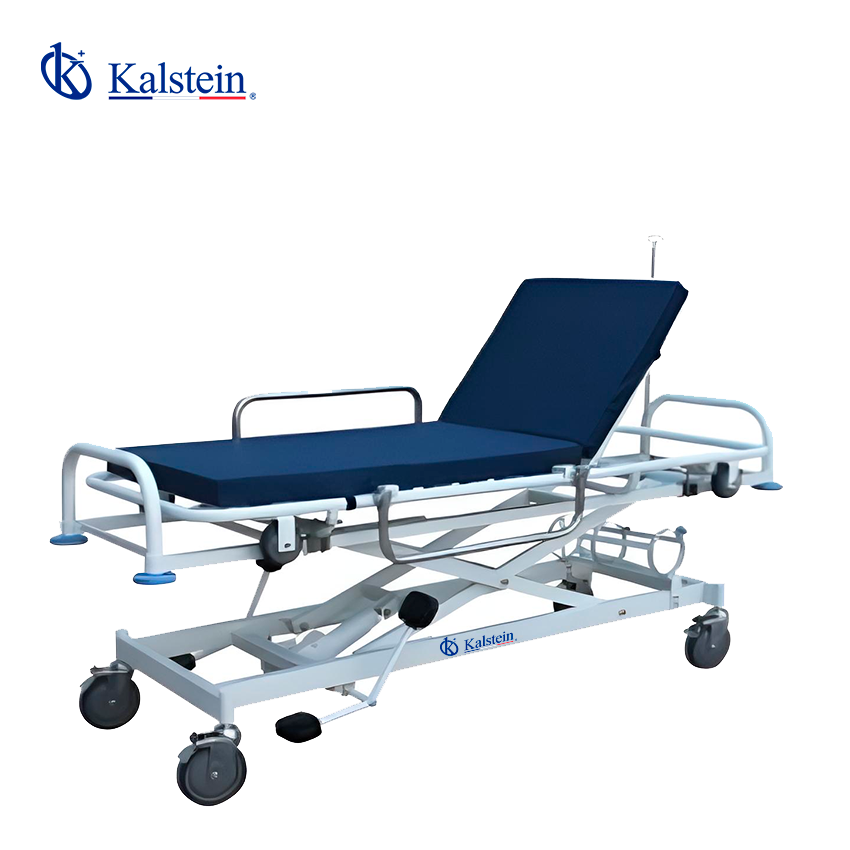
When it comes to manual transfer stretchers, two prominent products stand out in the market – the Manual Stainless-steel Three Function Transfer Stretcher YR06286 from Kalstein and the Transfer Stretcher T-0465 from Medline. These products are essential in medical and emergency environments for safe and efficient patient transfer. In this comparative article, we delve into the features, functionalities, and market positioning of these two distinct stretchers.
The Manual Stainless-steel Three Function Transfer Stretcher YR06286 by Kalstein is crafted with precision, offering robust, stainless-steel construction that ensures durability and ease of maintenance. This stretcher is renowned for its three primary functions: height adjustment, backrest adjustment, and knee-break adjustment, making it versatile and user-friendly. The YR06286 is specifically designed for seamless transfer operations in hospital settings, where efficiency and safety are paramount. In contrast, the Transfer Stretcher T-0465 by Medline provides a fundamental transfer mechanism, focusing on basic functionality and ease of use. While both products cater to similar needs, subtle differences in their design and usability can impact a user’s choice.
| Features | Kalstein YR06286 | Medline T-0465 |
|---|---|---|
| Material | Stainless Steel | Basic Metal |
| Functions | Height, Backrest and Knee-break Adjustment | Basic Transfer Functionality |
| Durability | High | Moderate |
| Usage | Hospital, Clinics | Hospital |
| Price Range | Competitive | Economical |
How They Function
The Kalstein YR06286 operates with a manual system that allows caregivers to safely adjust the height and inclination of the stretcher to optimize patient comfort and operational efficiency. This adjustment process is facilitated through easy-to-use levers that securely lock the stretcher in the desired position.
Conversely, the Medline T-0465 relies on a simpler manual system that provides straightforward transfer capabilities, generally requiring more manual intervention to secure the patient safely. While it covers the basic requirements for patient transfer, the adjustability and comfort level are less sophisticated compared to the Kalstein model.
What They Are Used For
Both stretchers primary role is to facilitate the safe and efficient transfer of patients within medical facilities. The Kalstein YR06286 is often preferred in environments where there is a high demand for patient comfort and varied positioning, like during surgical procedures or intensive care transfers. Its multi-functionality enhances both patient care and the caregiver’s experience.
The Medline T-0465 serves a similar purpose but is often utilized in situations where straightforward transfers are sufficient. It is particularly suitable for facilities with a tighter budget or less need for extensive adjustability.
Types
Manual transfer stretchers typically come in various configurations, from basic models focusing on simple horizontal transfers to advanced models like the Kalstein YR06286 that offer multiple adjustment settings. These options allow institutions to choose based on the specific needs of their patient population and operational requirements.
Market Price
The market for manual transfer stretchers varies widely, depending largely on materials, functionality, and brand reputation. The Kalstein YR06286 is priced competitively considering its advanced features and stainless-steel construction, while the Medline T-0465 targets a more economical segment without compromising on basic quality.
Frequently Asked Questions
What materials are the stretchers made of?
The Kalstein YR06286 is made of stainless steel, offering durability and ease of maintenance, whereas the Medline T-0465 uses basic metal.
Are these stretchers easy to operate?
Yes, both stretchers are designed with ease of use in mind, although the Kalstein model provides more ergonomic adjustability options.
What is the warranty period for these products?
Both products typically come with a standard manufacturer warranty, though specifics can vary, and it is advised to check with the supplier for detailed warranty terms.
Advantages and Disadvantages
The Kalstein YR06286 offers several advantages, including superior build quality, multiple adjustment options, and enhanced patient comfort, making it suitable for diverse medical scenarios. However, it might be perceived as costly relative to basic models.
In contrast, the Medline T-0465 is more budget-friendly and accessible for facilities with limited financial resources but lacks the advanced functionalities and durability offered by its Kalstein counterpart.
Usage in the Field
In practical applications, the Kalstein YR06286 is often employed in scenarios demanding dynamic patient handling – from emergency rooms to specialized surgical settings. Its robust design and versatility are significant assets in high-pressure environments.
The Medline T-0465 fits well in routine patient transfer scenarios where extensive adjustability is not a priority, providing a dependable yet simple solution.
Recommendations
To maximize the utility of these stretchers, regular maintenance and timely inspections are critical. Ensuring the mechanisms operate smoothly without obstructions can extend the longevity of the equipment. It is also recommended to involve healthcare personnel in operating protocol training to leverage the full capabilities of the Kalstein YR06286, thereby enhancing patient care and safety.
With all these factors considered, if you are seeking a fusion of innovation and quality, you have come to the right place. At Kalstein, we offer you the luxury of exploring our exclusive catalog of laboratory equipment. Each piece is manufactured with a high level of excellence. Our online purchase channels are intuitive and agile, designed for your convenience, ensuring the friendliest prices. Don’t hesitate any longer; we bring science to life, and it’s time to be part of our community. https://kalstein.qa/product/manual-stainless-steel-three-function-transfer-stretcher-yr06286/.