
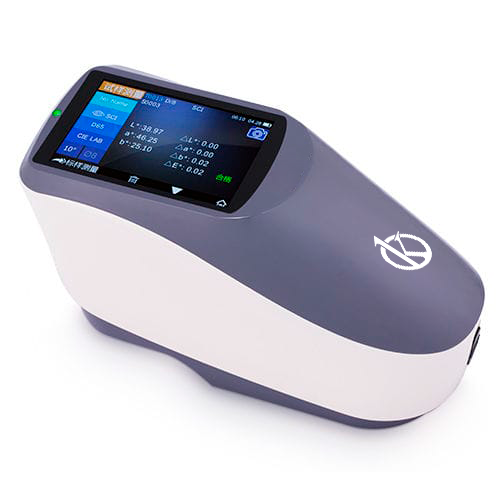
When it comes to precision and innovative design in laboratory equipment, spectrophotometers stand at the forefront. The Grating Spectrophotometer with 20mm Aperture YR05503 by Kalstein and the CM-700d Spectrophotometer by Konica Minolta provide users with excellent capabilities in color measurement and analysis. While both products offer remarkable features, subtle differences can guide potential buyers in choosing the right tool for their specific needs.
The Grating Spectrophotometer with 20mm Aperture YR05503, designed by Kalstein, is noted for its high accuracy and reliability. It features an exceptional 20mm aperture, allowing detailed color analysis across various applications. The device supports multiple modes, including SCI and SCE, and offers detailed data output with user-friendly software integration. On the other hand, the CM-700d Spectrophotometer by Konica Minolta combines ease of use with advanced technology, focusing on ergonomic design and a broad spectral range for comprehensive color management. Although each spectrophotometer serves similar purposes, their unique features distinguish them in the marketplace, leaning towards specific user preferences and operational needs.
| Feature | Kalstein YR05503 | Konica Minolta CM-700d |
|---|---|---|
| Aperture Size | 20mm | 8mm |
| Spectral Range | From 360 nm to 740 nm | From 400 nm to 700 nm |
| Modes | SCI and SCE | SCI and SCE |
| Interface | PC software integrated | Standalone with screen |
| Portability | Yes, with battery power | Yes, compact design |
| Price Range | Competitive pricing | Higher pricing |
How They Work
The Grating Spectrophotometer with 20mm Aperture YR05503 works by passing light through an aperture, dispersing it with a grating to measure the wavelengths accurately. The device captures reflective data from surfaces, which allows users to determine color variations with high precision. Its integration with PC software enables easy data handling and report generation, enhancing usability in professional settings.
The CM-700d Spectrophotometer operates similarly, employing a smaller aperture, making it ideal for more compact sampling areas. It is designed with an optical system that captures diffuse reflected light, offering reliable readings for simultaneous SCI and SCE measurements. With a user-friendly interface and a sleek portable design, it is tailored for diverse measurement tasks.
Applications
Both spectrophotometers are essential tools in color management across various fields. The Kalstein YR05503 is extensively used in quality control labs, textile and paint industries, and any sector requiring precise color evaluation. Its 20mm aperture size is particularly beneficial for analyzing larger sample areas.
The CM-700d by Konica Minolta is also valuable in similar settings but is proposed as an excellent choice for tasks requiring frequent mobile measurements due to its ergonomic build. The 8mm aperture size also suits smaller surface areas, providing flexibility in application.
Types
There are several types of spectrophotometers, mainly differentiated by their optical geometry and measurement mode, like 0°/45° (or vice versa), integrating spheres for diffused measurements (SCI/SCE), and handheld versus benchtop devices. Understanding the specific needs of your analysis can help you choose the most suitable device.
Market Price
The pricing for spectrophotometers can vary widely, influenced by technical specifications, brand reputation, and included software. Kalstein’s Grating Spectrophotometer YR05503 offers competitive pricing, often more accessible compared to high-end models like the Konica Minolta CM-700d, which, while premium, reflects its advanced design and manufacturer’s standing.
Frequently Asked Questions
What is the primary difference between SCI and SCE modes?
SCI (Specular Component Included) includes the specular reflection component in measurements, while SCE (Specular Component Excluded) does not, influencing color appearance on different materials.
Can both devices be used for quality assurance in manufacturing?
Absolutely. Both spectrophotometers are excellent for ensuring consistent quality and color fidelity in manufacturing processes.
Which device is better for small sample sizes?
The CM-700d, with its 8mm aperture, is often better suited for smaller sample sizes compared to the 20mm aperture of the Kalstein YR05503.
Advantages and Disadvantages
The Grating Spectrophotometer by Kalstein offers advantages like a larger aperture for enhanced analysis detail, competitive pricing, and integration with versatile PC software, accommodating broader user needs. Potential disadvantages include its larger size if portability is a primary requirement. Meanwhile, the Konica Minolta CM-700d provides portability and ease of use, but these features come with a higher price point and less aperture flexibility.
Field Usage
In practice, the YR05503 is often employed in stationary lab settings where detailed analysis and accuracy are crucial. Its robust design supports rigorous testing needs. The CM-700d is useful in fieldwork due to its compact size and easy handling, allowing quick measurements at various locations.
Recommendations
To maximize the utility of these spectrophotometers, it is crucial to ensure regular calibration and secure a stable environment for precise measurement. Taking care of the lenses and using compatible software can also significantly enhance the device’s longevity and accuracy.
If you are seeking a blend of innovation and quality, you have arrived at the right destination. At Kalstein, we offer you the luxury of exploring our exclusive catalog of laboratory equipment. We manufacture each device with a high level of excellence. Our intuitive and agile online purchasing channels are designed for your convenience, ensuring the most friendly prices. Do not hesitate, we bring science to life, and it’s time to become a part of our community. https://kalstein.qa/product/grating-spectrophotometer-with-20mm-aperture-yr05503/.