
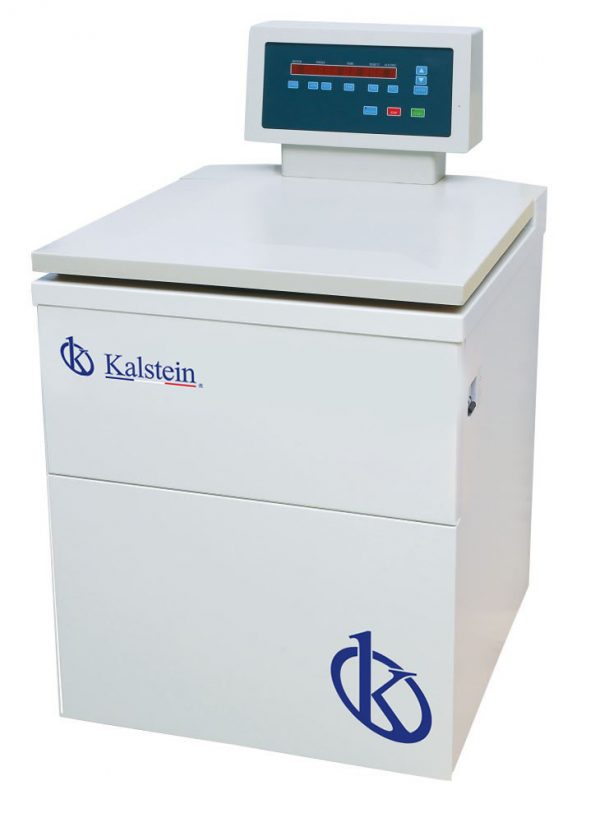
The Low Speed Centrifuge YR124-1 from Kalstein is designed to meet the demanding needs of modern laboratories, ensuring precise separation processes through its robust construction and advanced technology. With a digital interface, it allows for easy adjustments and monitoring of the centrifugal process. This centrifuge exhibits a maximum speed of 4000 rpm, with a maximum RCF of 2200 xg, allowing for a variety of laboratory applications. Its structural design ensures minimal vibration and noise, making it a pleasant and safe addition to any workspace. The YR124-1 model demonstrates both efficiency and reliability, making it an ideal choice for clinical laboratories, research labs, and medical settings.
In comparison, the Centrífuga Modelo 80-2 by Digisystem Laboratory Instruments also serves the essential function of separating mixtures by density in laboratory settings. This model features a maximum speed of 4000 rpm, comparable to the Kalstein model. It is equipped with a timer function and manual speed control. While effective, it lacks the advanced digital interface seen in the Kalstein product, potentially hindering ease of use in some scenarios. The design prioritizes functionality and cost-efficiency, making it suitable for laboratories looking for a basic yet reliable centrifuge solution.
Comparison Table
| Feature | Kalstein Low Speed Centrifuge YR124-1 | Digisystem Centrífuga Modelo 80-2 |
|---|---|---|
| Maximum Speed | 4000 rpm | 4000 rpm |
| Maximum RCF | 2200 xg | Not specified |
| Interface | Digital | Manual |
| Noise and Vibration | Minimal | Typical |
| Application | Clinical, Research, Medical | General Laboratory Use |
How They Work
The Kalstein YR124-1 centrifuge operates by spinning samples at high speeds, utilizing centrifugal force to separate components based on density. Its digital interface allows the user to precisely set rotational speeds and monitor the process in real-time. The device minimizes noise and vibration during operation, which is key to maintaining a controlled laboratory environment.
Similarly, the Digisystem Model 80-2 uses centrifugal force for separation. This model requires manual operation to set the desired speed and time. While effective in performing essential separation functions, the lack of a digital display may make it less intuitive for those accustomed to more modern interfaces.
What It’s For
Both centrifuges are primarily used to separate particles from liquids based on density differences. The Kalstein Low Speed Centrifuge YR124-1 is particularly suited for clinical applications, enabling efficient processing of blood samples and other biological fluids. Its precision and reliability make it ideal for research where reproducibility is crucial.
The Digisystem Model 80-2 also finds its use in general laboratory applications where basic component separation is needed. It is a cost-efficient solution for basic lab work, making it a viable option for educational institutions or facilities where high precision is not a primary concern.
Types
Centrifuges are typically classified by speed: low-speed, high-speed, and ultra-speed. Both the YR124-1 and the Model 80-2 belong to the low-speed category, ideal for routine laboratory tasks for common sample processing.
Market Price
The market price of centrifuges can vary widely depending on specifications and brand. Generally, low-speed centrifuges like Kalstein’s YR124-1 and Digisystem’s 80-2 range from $500 to $2000. The digital functionalities and enhanced user interface of Kalstein’s product may justify a higher price range.
Frequently Asked Questions
How do I choose the right centrifuge for my laboratory?
Consider the types of samples processed, required speed, capacity, and whether an advanced digital interface is necessary for your operations.
Can these centrifuges process blood samples?
Yes, both the Kalstein YR124-1 and the Digisystem 80-2 are capable of processing blood samples, making them suitable for clinical laboratories.
Are these devices user-friendly?
Kalstein’s YR124-1 offers a more user-friendly experience due to its digital interface, while Digisystem’s 80-2 requires manual operation, which might seem cumbersome for some users.
Advantages and Disadvantages
The Kalstein YR124-1 stands out with its digital interface, low noise and vibration levels, and wide usability in different laboratory settings, which are significant advantages over the more manual Digisystem 80-2. However, both products share the limitation of being low-speed centrifuges, which might not meet the requirements of high-speed applications.
Product Use in the Field
In practical scenarios, these centrifuges receive extensive use in clinical diagnostics, where the precision of the Kalstein YR124-1 proves invaluable. It is also indispensable in research laboratories for sample preparation. On the other hand, the Digisystem 80-2 caters to basic separation tasks in less demanding environments.
Recommendations
For optimal performance, regularly calibrate both centrifuges and perform routine maintenance checks. Ensure that operators are trained to handle the specific controls of each model, which is particularly important for the manual settings of the Digisystem model.
If you are searching for a blend of innovation and quality, you have come to the right place. At Kalstein, we invite you to explore our exclusive catalog of laboratory equipment. Each piece we manufacture reflects a commitment to excellence. Our intuitive online purchasing channels are designed for your ease, ensuring the most amiable prices. Do not hesitate anymore, we bring science to life, and it is time for you to become part of our community. https://kalstein.qa/product/low-speed-centrifuge-yr124-1/.