
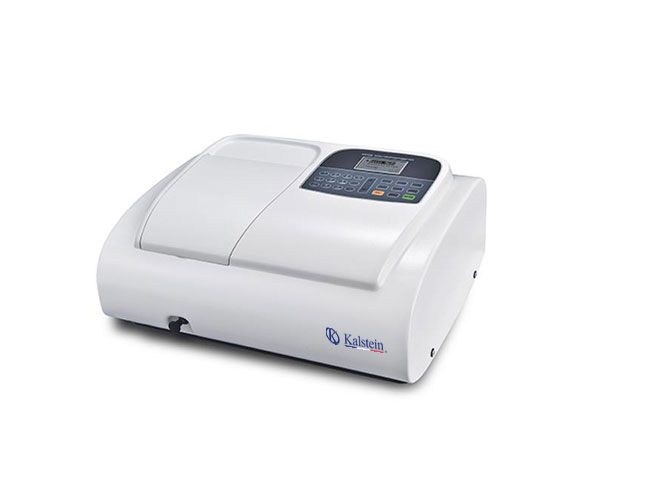
The world of UV-Vis spectrophotometry is driven by precision and innovation. Today, we delve into a comparative analysis of two prominent products in the field: the UV VIS Spectrophotometer- YR01852 by Kalstein and the UV-2600i UV-Vis Spectrophotometer by Shimadzu. Each device offers unique features geared towards enhancing laboratory efficiency and accuracy.
The UV VIS Spectrophotometer- YR01852 by Kalstein is a state-of-the-art instrument designed to meet high standards in scientific research. Known for its reliable performance, this spectrophotometer integrates modern technology to ensure precise and repeatable results. Meanwhile, the UV-2600i UV-Vis Spectrophotometer by Shimadzu is celebrated for its robust design and advanced software capabilities, offering comprehensive solutions for various analytical needs.
| Feature | Kalstein UV VIS Spectrophotometer- YR01852 | Shimadzu UV-2600i UV-Vis Spectrophotometer |
|---|---|---|
| Brand | Kalstein | Shimadzu |
| Wavelength Range | 190 – 1100 nm | 185 – 1400 nm |
| Bandwidth | 1 nm | variable slit widths |
| Detector | Silicon Photodiode | Photomultiplier Tube (PMT) and Silicon Photodiode |
| Software | Friendly user interface | Advanced LabSolutions UV-Vis |
| Price | Competitive | Higher range |
How They Work
The UV VIS Spectrophotometer- YR01852 from Kalstein employs a silicon photodiode detector for accurate and consistent measurements. It operates over a wavelength range of 190 – 1100 nm with a fixed spectral bandwidth of 1 nm, providing high precision in quantitative and qualitative analyses.
On the other hand, the UV-2600i from Shimadzu includes both a photomultiplier tube and a silicon photodiode for extended sensitivity. Its wavelength capability ranges from 185 – 1400 nm, complemented by variable slit widths that offer flexibility in spectral resolution, appealing to users requiring advanced analytical methodologies.
Applications
Both spectrophotometers serve a wide range of applications in fields such as pharmaceuticals, biotechnology, and chemistry. They are pivotal in measuring the absorbance and transmittance of light through liquid and solid samples, hence facilitating experiments in drug development, environmental testing, and food quality analysis.
Types
UV-Vis spectrophotometers can generally be categorized by their detector type, including single-beam and double-beam instruments. The Kalstein UV VIS Spectrophotometer- YR01852 falls into the category of high-precision devices with robust stability, while Shimadzu’s UV-2600i represents high versatility in analytical range.
Market Price
The market price for UV-Vis spectrophotometers can vary significantly based on the features and capabilities offered. The Kalstein UV VIS Spectrophotometer- YR01852 is competitively priced, making it an attractive option for laboratories with budget considerations. The Shimadzu UV-2600i, while offering advanced features, is positioned in a higher price range, reflecting its additional capabilities.
FAQs
What is the primary function of a UV-Vis spectrophotometer?
A UV-Vis spectrophotometer measures the absorbance and transmittance of ultraviolet and visible light by a sample, aiding in the analysis of concentration and chemical composition.
Can these instruments be used for both solid and liquid samples?
Yes, both instruments can analyze solid and liquid samples, offering versatility across various research and industrial applications.
How do I choose between these two models?
Your choice should consider your specific analytical needs, budget constraints, and desired features such as wavelength range and software sophistication.
Advantages and Disadvantages
The UV VIS Spectrophotometer- YR01852 by Kalstein boasts a user-friendly interface and competitive pricing, positioning it as a cost-effective solution for many laboratories. Its 1 nm bandwidth ensures consistent results across analyses. However, the fixed bandwidth might not offer the same flexibility as the Shimadzu model, which features variable slit widths.
Shimadzu’s UV-2600i, with its advanced detection capabilities, provides a wider wavelength reach and additional software capabilities. Its versatility is unmatched but comes at a higher cost, which might be a consideration for budget-restricted operations.
Usage in the Field
These instruments find extensive use in academic research, pharmaceutical development, and quality control environments. The Kalstein model excels in settings where cost-efficiency and straightforward operation are key, while the Shimadzu model is optimal for advanced spectral analysis with adaptable parameters.
Recommendations
For optimal performance, regular maintenance such as calibration and cleaning of your spectrophotometer is recommended. Utilize the manufacturer’s support for any technical issues and consider software updates to enhance functionality over time. Leverage the intuitive design of Kalstein’s UV VIS Spectrophotometer for seamless integration into routine laboratory tasks and consider Shimadzu’s model if your research requires extensive spectral versatility.
If you are seeking a fusion of innovation and quality, you have come to the right place. At Kalstein, we offer the luxury of exploring our exclusive catalog of laboratory equipment. We manufacture each product with a high level of excellence. Our intuitive and agile online purchasing channels are designed for your convenience, ensuring the most friendly prices. Don’t hesitate any longer, we bring science to life; it’s time to become part of our community. https://kalstein.qa/product/uv-vis-spectrophotometer-yr01852/.