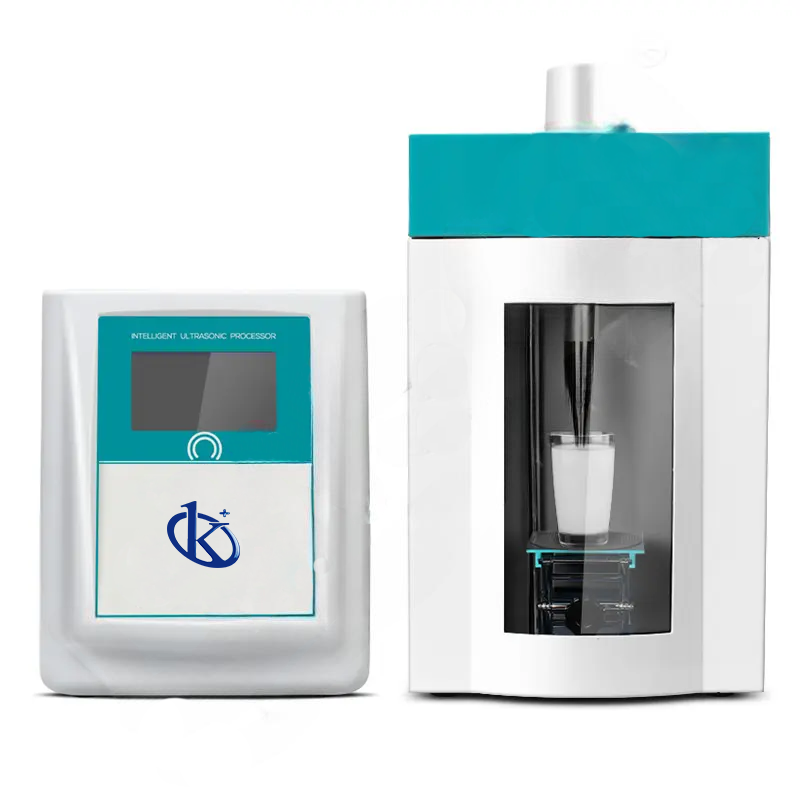
Ultrasonic Homogenizers: Practical Applications and Techniques 2026
Ultrasonic homogenizers have become a vital tool in clinical and hospital laboratories, delivering precise and efficient mixing, dispersion, and emulsification of samples. This technology leverages ultrasonic waves to create intense cavitation within liquids, ensuring uniformity and consistency. In 2026, understanding how to effectively use these devices is crucial for laboratory professionals aiming to enhance their workflows and outcomes.
What is it used for in 2026
In 2026, ultrasonic homogenizers are utilized in various laboratory applications, including:
- Cell Disruption: Efficiently breaking down cell walls to extract proteins, DNA, and RNA.
- Emulsification: Creating stable emulsions in food, cosmetic, and pharmaceutical products.
- Dispersion: Uniformly dispersing powders in liquids for analytical processes.
- Deagglomeration: Reducing particle size in suspensions for better reactivity and performance.
History and evolution of the technology
The history of ultrasonic homogenizers dates back to the early 20th century, with the advent of ultrasonic technology. Initially used in industrial applications, the technology evolved through the decades to find its place in laboratories. By the late 1990s, ultrasonic homogenizers became more compact and user-friendly, allowing for their widespread adoption in research and clinical settings. Today, advancements in control technology and user interfaces have made these devices essential tools for laboratory professionals.
How to use it step by step
Using an ultrasonic homogenizer involves a systematic approach to ensure optimal results. Here is a step-by-step guide:
- Preparation: Gather all necessary materials, including samples, solvents, and the ultrasonic homogenizer.
- Calibration: Ensure the device is calibrated according to the manufacturer's guidelines.
- Sample Setup: Place the sample in an appropriate container, ensuring it is compatible with ultrasonic processing.
- Adjust Settings: Set the power, time, and temperature according to your specific application requirements.
- Start the Process: Activate the ultrasonic homogenizer, monitoring the process to observe the sample's behavior.
- Post-Processing: After processing, carefully remove the sample and evaluate the results for uniformity.
Best techniques and protocols
To achieve the best results with ultrasonic homogenizers, consider the following techniques and protocols:
- Power Settings: Optimize power settings based on sample viscosity and desired outcome.
- Time Management: Use intermittent processing to prevent overheating, especially for heat-sensitive samples.
- Container Choice: Select the appropriate container to minimize cavitation loss and ensure efficient energy transfer.
- Cooling Techniques: Implement cooling methods to maintain sample integrity during processing.
Practical applications by laboratory type
Different laboratory types utilize ultrasonic homogenizers for specific applications:
- Clinical Laboratories: Used for nucleic acid extraction and cell disruption in molecular diagnostics.
- Food Laboratories: Emulsification of dressings and creams for quality control.
- Chemical Laboratories: Dispersion of nanoparticles in various solvents for research and development.
- Pharmaceutical Laboratories: Formulation of drug emulsions and suspensions to enhance bioavailability.
Regulations, standards and certifications
Ultrasonic homogenizers must comply with industry regulations and standards to ensure safety and effectiveness. Key certifications include:
- ISO 9001: Ensures quality management systems are in place.
- CE Marking: Indicates compliance with European health, safety, and environmental protection standards.
- FDA Approval: Necessary for devices used in clinical settings to ensure safety and efficacy.
Comparison with alternative technologies
When considering ultrasonic homogenizers, it's essential to compare them with alternative technologies:
- Mechanical Homogenizers: Generally more robust but less precise for emulsification and dispersion tasks.
- High-Shear Mixers: Effective for large volumes but may not achieve the same level of particle size reduction.
- Bead Mills: Useful for certain applications, but can be less efficient for small sample sizes.
Comparison of available models
| Model | Best for | Key specs | Recommended use case |
|---|---|---|---|
| YR05015 | Small sample homogenization | Power: 1.5-150W, Capacity: 0.1-150 ml | Cell disruption in molecular biology |
| YR05016 | Medium sample homogenization | Power: 2-5-250W, Capacity: 0.1-300 ml | Emulsification in food applications |
| YR05017 | Large sample homogenization | Power: 10-650W, Capacity: 0.1-500 ml | Pharmaceutical formulations |
| YR05018 | High power applications | Power: 10-900W, Capacity: 0.1-600 ml | Dispersion of high viscosity samples |
| YR05019 | Advanced emulsification | Power: 20-1200W, Capacity: 1-1000 ml | Cosmetic product development |
| YR05020 | High volume applications | Power: 50-1800W, Capacity: 1-1200 ml | Industrial scale emulsifications |
Common mistakes and how to avoid them
To ensure successful use of ultrasonic homogenizers, avoid the following common mistakes:
- Overheating: Monitor temperature settings and use cooling techniques to prevent thermal degradation of samples.
- Inadequate Mixing: Ensure proper power settings and processing times to achieve thorough mixing.
- Incorrect Container Selection: Use containers that are compatible with ultrasonic processing to maximize efficiency.
Maintenance, calibration and good practices 2026
Regular maintenance and calibration are critical for the performance of ultrasonic homogenizers. Follow these best practices:
- Routine Calibration: Calibrate the device as per manufacturer recommendations to ensure accuracy.
- Cleaning Protocol: Implement a cleaning schedule to prevent cross-contamination between samples.
- Visual Inspections: Regularly check components for wear and tear, replacing as necessary to maintain functionality.
Cost-benefit analysis 2026
Investing in ultrasonic homogenizers can provide significant benefits, including:
- Improved Efficiency: Faster processing times lead to increased productivity in laboratory workflows.
- Better Results: High consistency and quality of emulsions and dispersions enhance the reliability of results.
- Cost Savings: Reducing the need for additional processing equipment can lower overall laboratory costs.
Frequently asked questions
What factors should I consider when choosing an ultrasonic homogenizer?
When selecting an ultrasonic homogenizer, consider the sample volume, desired processing speed, power range, and compatibility with your specific applications. Assessing these factors will help you choose the most suitable model for your needs.
How can I ensure optimal results with my ultrasonic homogenizer?
To achieve optimal results, calibrate the device, set appropriate power and time settings, and use suitable containers. Additionally, monitor sample temperatures to prevent overheating during processing.
Can ultrasonic homogenizers be used for heat-sensitive samples?
Yes, ultrasonic homogenizers can be used for heat-sensitive samples by using intermittent processing and integrating cooling methods to maintain the integrity of the samples.
What maintenance is required for ultrasonic homogenizers?
Regular maintenance includes calibration per manufacturer guidelines, cleaning after each use to avoid cross-contamination, and visual inspections of the device's components for wear and tear.
Are there specific protocols for different laboratory applications?
Yes, specific protocols exist for various applications, including cell disruption, emulsification, and dispersion. It is essential to follow best practices tailored to each application for optimal results.
How do ultrasonic homogenizers compare to traditional mixing methods?
Ultrasonic homogenizers offer higher precision and efficiency compared to traditional mixing methods, achieving finer emulsions and dispersions in shorter time frames, which is particularly beneficial for laboratory applications.
Where can I request a quote for ultrasonic homogenizers?
You can request a quote for ultrasonic homogenizers by contacting Kalstein directly, where our team will assist you with your specific requirements.
If you are looking for a fusion of innovation and quality, you have come to the right place. At Kalstein, we offer you the luxury of exploring our exclusive catalog of laboratory equipment. We manufacture every device to the highest standards of excellence. Our intuitive and seamless online purchasing channels are designed for your convenience, securing the most competitive prices. Hesitate no longer — we bring science to life, it is time to become part of our community.